

The accelerating pace of digital transformation is creating growing challenges for ensuring data security in the cloud. What are the current challenges, and how can you protect your sensitive information? Follow our recommendations and learn about best practices for enhanced security.
Overview
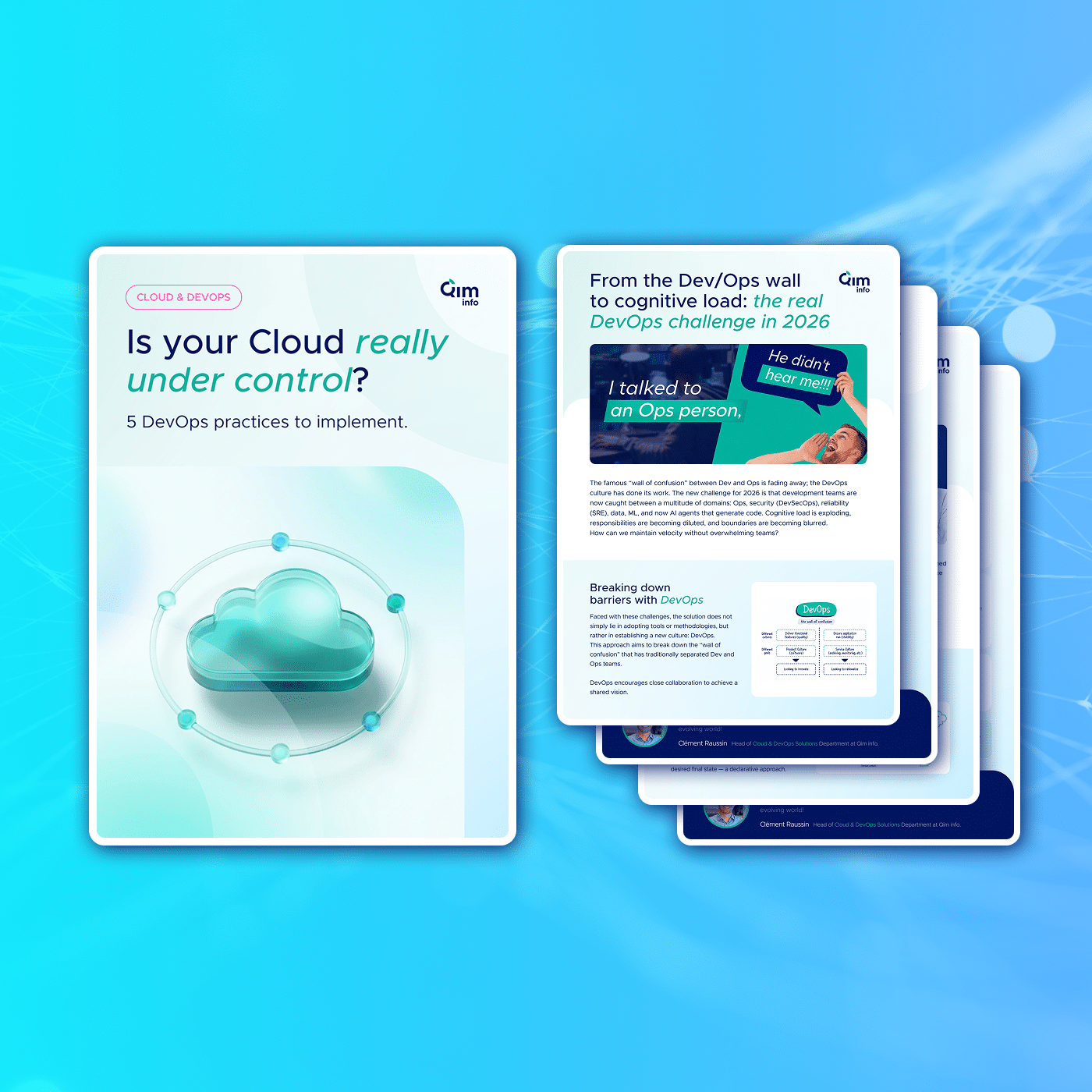
Take Back Control of Your Cloud
What is Cloud Computing?
Cloud computing refers to the provision of IT services (servers, storage, databases, network management, software, analysis and monitoring tools) over the Internet. It enables companies to do away with costly in-house infrastructures.
This solution contributes to innovation, offers flexible resources and generates economies of scale. Cloud services adjust to business needs, and only those actually used are billed, thus reducing operating costs.
Google Cloud, Microsoft Azure and Amazon Web Services (AWS) dominate the market as recognised cloud service providers, offering solutions tailored to meet the varied needs of businesses.
Cloud security: why is it important?
A 2023 McKinsey study indicates that 45% of companies that migrated to the cloud experienced security incidents during the year. These incidents include data breaches, intrusions, and configuration errors, highlighting the need to protect cloud environments.
Companies must therefore ensure that sensitive data is protected against cyber threats and that compliance standards—such as the GDPR in Europe—are met. Cloud security is just as crucial as productivity and scalability. Protecting customer data and internal information is a top priority to avoid financial and reputational consequences.
To find out more, read our article “The challenge of data protection in the cloud“.
What are the security challenges in the cloud?
Security in the cloud brings many challenges that companies need to tackle rigorously. Here are the main ones:
- Protecting sensitive data: in a cloud environment, information is often stored on multiple servers in different regions, making it difficult to secure and vulnerable to unauthorised access.
- Identity and Access Management (IAM): Strict control over access and identities is essential to prevent unauthorized or malicious users from accessing sensitive information.
- Configuration errors: many companies make configuration errors in their cloud environments, leaving loopholes that can be exploited by cybercriminals.
- Regulatory compliance: with strict laws like the GDPR, European companies must protect data while complying with the rules in force, or risk heavy penalties.
- Cyber attacks: the cloud is vulnerable to attacks such as denial-of-service attacks (DDoS) or ransomware, aimed at disrupting services or extorting businesses.
These challenges underline the importance of implementing robust security strategies adapted to the cloud environment.
👉 You might be interested in our article on digital sovereignty, as well as the one on the sovereign cloud.
How do you ensure security in the cloud?
To secure data in the cloud effectively, companies need to implement a series of essential best practices.
- Data encryption: encryption makes data unreadable to unauthorised users, whether the data is in transit or in storage.
- Multi-factor authentication (MFA): MFA adds multiple levels of verification so as to enhance security, even if a password is compromised, thereby preventing unauthorised access to cloud systems.
- Role-based access control (RBAC): RBAC limits access to sensitive data depending on business needs, thereby reducing the risk of unauthorised access by assigning specific rights to users.
- Continuous monitoring and logging: real-time monitoring and activity logging quickly detect suspicious behavior, enabling an immediate response to potential threats.
- Vendor security assessment: selecting a cloud provider that complies with security standards, such as the GDPR, is crucial if you wish to guarantee data protection and maintain regulatory compliance.
- Shared security architecture: security in the cloud is based on sharing responsibility between the provider and the user; understanding this form of distribution prevents potential vulnerabilities, by ensuring that each party protects its area of responsibility.
- Automating security processes: automating security tasks (configuration management, threat detection) reduces human error and improves incident response times.
- Ongoing employee training: regular training of teams in cloud security best practices reduces human error, a frequent source of security incidents.
- Data backup: regular, secure backups guarantee data recovery in the event of an incident, thus limiting critical losses.
By applying these nine best practices, companies can strengthen the security of their cloud environments and significantly reduce the risk of data breaches. A proactive, structured approach is essential if you are to guarantee optimum data protection in the cloud.
What solutions are out there for those looking to guarantee security in the cloud?
To enhance security in the cloud, a number of technical tools and specific solutions are available. Here are the main options commonly used to protect cloud environments effectively:
Cloud firewalls
Palo Alto Networks Prisma Cloud, Check Point CloudGuard and AWS Network Firewall filter and monitor network traffic using strict security rules. These tools block unauthorised access and intrusion attempts.
Intrusion detection and prevention systems (IDS/IPS)
Snort, AlienVault USM and IBM QRadar analyse traffic, looking for anomalous behavior. By identifying threats in real time, these systems protect against attacks before they reach the data.
Identity and access management (IAM) solutions:
Okta, Azure Active Directory and AWS IAM control access to cloud resources using identity-based security policies. They use multi-factor authentication (MFA) and permissions management to ensure that only authorised users can access sensitive data.
Advanced encryption
Vormetric Data Security, CipherCloud and AWS Key Management Service (KMS) provide data confidentiality by making the data unreadable to unauthorised users, whether it is in transit or in storage.
Backup and recovery services
Veeam Backup for AWS, Azure Backup and Google Cloud Backup and DR automate backups of data stored in the cloud. If disaster strikes, they enable rapid recovery and guarantee business continuity.
Monitoring and logging tools
Splunk, Datadog and AWS CloudTrail provide continuous monitoring and activity logging. They provide real-time visibility of user behavior and anomalies, enabling a rapid response to threats.
Safety automation
Ansible, Puppet and AWS Config automate security configuration management, patching and threat detection, thus reducing human error and increasing responsiveness to risks.
Find out how Qim info can help you secure your data in the cloud with a tailored approach, with our article “Security solutions in the cloud”
How should I go about choosing a secure cloud service?
First and foremost, it’s worth noting that providers secure all the elements for which they are responsible. However, every configuration you make to the hosted services has an impact on security, and can lead to vulnerabilities. The decision to go with a cloud service must be based on rigorous criteria. Here are some points to consider:

Scalability
An efficient cloud provider must enable the infrastructure to evolve smoothly, in a way that can adapt to suit the company’s needs, whether they increase or decrease. A flexible solution ensures optimum performance in line with demand, without unnecessary costs, by charging only for the resources actually used – an advantage during seasonal peaks.
Certifications and standards
Compliance with industry security standards is essential. Opting for certified suppliers (CSA, ISO 27001, HIPAA, PCI DSS) ensures compliance and high-level data security.
Safety and compliance
Data security is vitally important in the cloud. The supplier must offer:
- Encryption of data in transit and at rest, to guarantee confidentiality,
- Identity and access management (IAM) with multi-factor authentication and role-based access control,
- Monitoring tools for real-time threat detection,
- Compliance with specific standards (e.g. the GDPR for the EU, security standards for the financial and healthcare sectors).
Customised services
The supplier’s offer must match work processes and in-house expertise. The main models are:
- Infrastructure as a Service (IaaS): leasing servers and storage for a flexible infrastructure,
- Platform as a Service (PaaS): an environment for developing applications without infrastructure management,
- Software as a Service (SaaS): access to applications via the cloud.
Take Back Control of Your Cloud
Performance and reliability
The performance of the CSP must be verified on the basis of criteria such as:
- Service Level Agreements (SLAs) guaranteeing availability and uptime,
- Response time and latency to avoid slowdowns,
- Ability to handle intensive loads without compromising processing speed.
Data backup and disaster recovery
Proactive incident management is essential. A good supplier will offer:
- Regular, secure backups for business continuity,
- Recovery time objectives (RTO) and recovery point objectives (RPO ) to limit data loss,
- Automation to reduce errors and simplify recovery processes.
Customer support
Responsive customer support is crucial in the event of a problem. The CSP must guarantee:
- 24/7 support via telephone, e-mail or online chat,
- Knowledge base and self-help guides for rapid resolution,
- Fast response times and reliable support.
Cost and pricing model
Pricing models can include pay-per-use or subscription. Things to consider include:
- Data transfer costs: some providers charge for data transfer,
- Transparent pricing: Make sure there are no hidden costs and that billing is clear and detailed.
Don’t hesitate to use ancillary services to ensure that changes to your cloud architecture are secure. Looking for a trusted partner to secure your cloud operations? Contact Qim info for personalised support.
Qim info, the best choice for your cloud security!
At Qim info, we understand the specific security challenges presented by the cloud and by each company’s infrastructure. Our Cloud and DevOps experts design tailor-made security solutions to protect your data and ensure compliance in your cloud environments.
Using advanced tools and proven practices, we ensure the confidentiality, integrity and availability of your critical information, while maintaining optimum operational flexibility.
Our approach is tailored to each customer’s needs, whether for public, private or hybrid infrastructures, and incorporates monitoring, automation and identity management processes, so as to reinforce protection at every level. Thanks to our expertise and technology partnerships, we offer comprehensive support for a secure cloud transformation, optimising your performance while controlling risks.