

Before a deployment fails or a production rollout becomes risky, the DevOps engineer is already hard at work. Here’s a closer look at this cross-functional role—one that is often misunderstood but has become central to modern IT organizations.
In a nutshell:
- Education level: 3 to 5 years of higher education.
- Role: A cross-functional role spanning development, operations, and security.
- Employability: very high.
- Soft skills: communication, collaboration, and a culture of automation.

Take Back Control of Your Cloud
What is a DevOps engineer?
First and foremost, let’s remember that the term“DevOps engineer”is a paradox. It runs counter to the very DevOps culture it claims to embody. To understand this, we need to go back to one of the pillars of DevOps culture: breaking down the silos between the different roles involved in a product’s development cycle. If the term “DevOps” doesn’t mean anything to you, I strongly recommend taking a look at this article, which explains in detail what the DevOps culture is all about.
Among other things, for a company to successfully adopt a DevOps (or DevSecOps) strategy, all teams involved in the development cycle must be included. Creating a DevOps engineer position without including the other teams in this process is a bit like trying to bake a cake without mixing the ingredients: it goes against the very spirit of DevOps.
Despite this paradox, however, the term “DevOps Engineer” has massivelt increased in popularity over recent years. Today, it seems that every company wants to have its very own “DevOps wizard”. So what is a DevOps engineer?

From a theoretical viewpoint, including a DevOps engineer in a team demonstrates the willingness of the company and its IT team to initiate or consolidate a DevOps approach as part of their development cycle. Looking at it within this context, the DevOps engineer can be defined as a change agent or a key player in strengthening the DevOps vision within teams. This involves following specific methods, setting up and managing work tools, and in fact any other action that assists with streamlining the development cycle, from planning right through to monitoring.
In practice, “DevOps engineer” is a cross-functional role that combines various aspects of specialized fields with the goal of bridging the gap between development and operations and facilitating the software delivery process in a more efficient, reliable, and continuous manner. A non-exhaustive list of these specialties includes: software developer, operations engineer, systems and networks engineer, CI/CD engineer, cloud engineer, security engineer (increasingly common with the concept of DevSecOps), and more…
👉 The DevOps consultant defines and initiates the transformation; the DevOps engineer implements it and keeps it running on a day-to-day basis.
What is the role of a DevOps engineer?
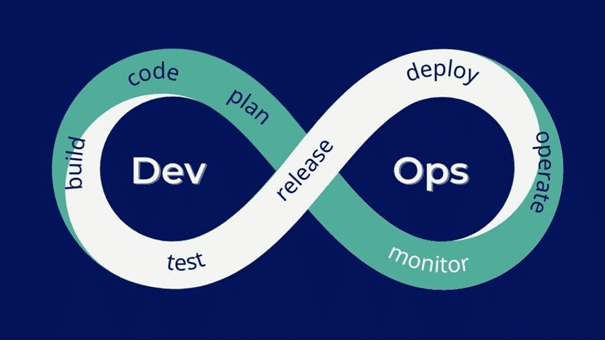
In brief, the role of a DevOps engineer is to streamline the software development lifecycle around three main axes:
- Collaboration among the various teams.
- Process automation.
- Continuous improvement of systems.
A DevOps engineers strives to guarantee the scalability, security and performance of systems, enabling a rapid and reliable delivery of software to end-users. They develop these three main areas by undertaking numerous actions.
What type of tasks do they complete?
Collaboration and communication

Breaking down the “wall of confusion” that can exist between developers and operations engineers is crucuial when successfully implementing a DevOps strategy. A DevOps engineer should not become the only bridge between Dev and Ops, but rather the architect who constructs this bridge. They are tasked with ensuring smooth communication and collaboration, without becoming the Single Point of Failure in DevOps operations.
To do this, they initiate teams in the DevOps culture, providing them with suitable methods and tools, and encouraging a genuinely different way of thinking when it comes to the way in which the product development lifecycle is approached. They help teams come together to focus on common issues and support them throughout this transition.
Observability

One of the most embarrassing issues for a DevOps engineer is discovering a service is unavailable via an end-user ticket. Observability within the development cycle is a priority: it allows anomalies to be quickly and effectively detected before being escalated to the appropriate people.
To achieve this, monitoring and alerting tools need to be put in place to collate logs, metrics and traces, and to launch alerts in the event of a problem. Installing, managing, configuring and using these tools forms an integral part of the role of a DevOps engineer.
Security

Although a legendary new person called the “DevSecOps engineer” has recently come onto the scene, and they are making security a focal point of the development cycle, a DevOps engineer also needs to look at security aspects in their daily work.
This includes, for example, secret management, certificate management, secure communications, rights management and IAM, data encryption, vulnerability scanning, integration of automated security tests into CI/CD pipelines, etc.
Infrastructure management and maintenance

A DevOps engineer or an undercover systems engineer? It’s not unusual for a DevOps engineer to also take on the role of a systems engineer or administrator. Wherever a company deploys its services, the DevOps engineer must be able to manage and maintain the infrastructure elements that host these services. This can involve managing and administering environments on-site, in the Cloud, on virtual machines, Kubernetes clusters, Serverless and much more.
CI/CD (continuous integration/continuous delivery)

As part of process automation, the establishment of CI/CD pipelines enable automated code testing and deployment, ensuring frequent, reliable deliveries. These pipelines can provide developers with rapid feedback on the quality of code, thereby reducing manual errors. By centralising and standardising these processes, DevOps engineers foster collaboration between development, testing and operations teams.
IaC (Infastructure as Code)

Once more with a view to automation, IaC enables digital infrastructure to be provisioned and managed in an automated, stable and reliable way. Not only does this allow you to version each modification, it also means you can manage resources in real time.
IaC can be split into two main use cases: infrastructure provisioning, which defines and deploys Cloud resources in a declarative manner, and server configuration, which manages software installation, configurations and upgrades to existing systems. These two approaches complement each other to offer full, automated management of both the infrastructure and its configuration.
Maintaining a functional and up-to-date IaC is crucial in terms of disaster recovery. It enables rapid redeployment of the infrastructure from automatic start-up, minimising service interruptions.
What training do you need to become a DevOps engineer?
A DevOps engineer role generally requires between 3 and 5 years studying in higher education. There are many different ways to become a DevOps engineer.
If you already have professional experience in a role related to DevOps engineering (systems engineer, developer, integrator, etc.), there are numerous training courses and certifications available so that you can take your career in a new direction.
These include the certification courses offered by the three major Cloud providers:
- AWS Certified DevOps Engineer – Professional: perfect for those who want to specialise in the AWS ecosystem. It covers both basic and advanced concepts of infrastructure management and application deployment on AWS.
- Google Professional DevOps Engineer: focuses on designing and implementing CI/CD pipelines, managing services, and implementing monitoring and security on the Google Cloud Platform.
- Microsoft Certified: Azure DevOps Engineer Expert: specialising in Azure, this certification teaches you how to bring together people, processes and technologies to seamlessly deliver products and services.
There are also bootcamps such as:
- Simplilearn – DevOps Engineer Masters Program: this intensive programme covers everything from the basics to advanced techniques, including the use of tools such as Git, Docker, Jenkins, Puppet, Chef, Kubernetes and Nagios.
- The Wagon – DevOps Bootcamp: an immersive programme that teaches the practical skills needed to automate application deployment, manage infrastructure and maintain resilient systems.
- Ironhack – DevOps Bootcamp: this bootcamp focuses on teaching the practical and theoretical skills needed to follow a successful career in DevOps, including container management, automation, and security best practices.
In addition, there are many online training programs that combine theoretical and practical courses to give you a comprehensive understanding of DevOps practices and tools, thereby preparing you for a career as a DevOps engineer.
If you’re still in school and thinking about which program to pursue, there are also academic tracks closely related to the field of DevOps engineering, whether at a university or an engineering school.
How can you become a DevOps master?
If you choose the Bac+5 route (five years of higher education), there are several types of masters courses that can provide you with the skills you need to orient your career towards becoming a DevOps engineer. As this profession encompasses a large number of different specialities, there are many different master’s degrees that are compatible with your ambition of becoming a DevOps engineer. Here are some examples:
- Master in Computer Science
- Master in Software Engineering
- Master in Information Systems
- Master in Cybersecurity
- Master in Systems and Network Engineering
- Master in DevOps and Cloud Computing
- And too many more to mention!
By choosing one of these masters degrees, you’ll acquire the technical and theoretical skills you need to launch your career as a DevOps engineer.
What makes a good DevOps engineer?
To be able to carry out the numerous tasks assigned to a DevOps engineer, they will need to possess cutting-edge technical skills. In fact, it could be described as a fine Swiss Army knife full of skills, which they will develop over the course of their career, depending upon the technologies they have encountered along the way. Here’s an overview:
Infrastructure management
Expertise in servers, networks and operating systems (Linux in particular). Shell will become your best friend… or at least you’ll have to put up with it from time to time! It’s also impossible not to mention Kubernetes, the essential container orchestrator.
Tools/Technologies: Linux, Windows Server, VMware, OpenStack, Kubernetes, etc.
Cloud Computing
More and more companies are turning to the Cloud for deployment of their services. Expertise on platforms such as AWS, Microsoft Azure and Google Cloud Platform has become a key skill for DevOps engineers.
Tools/Technologies: AWS (EC2, S3, Lambda), Azure (VM, Blob Storage, Functions), Google Cloud (Compute Engine, Cloud Storage, Cloud Functions), etc.
Automation and Scripting
Whether using scripts or task automation tools, it’s essential to know when and how to automate a process. You have to remember that automating everything that moves isn’t always the best solution!
Tools/Technologies: Bash, Python, Ansible, Puppet, Chef, PowerShell, etc.
Infrastructure as Code (IaC)
Another essential skill is that a DevOps engineer must be proficient in automating the deployment of digital infrastructure via code.
Tools/Technologies: Terraform, AWS CloudFormation, Ansible, Pulumi…
Continuous integration and delivery (CI/CD)
This is the skeleton framework for a development life cycle. Building and improving integration and deployment pipelines is an ongoing task for DevOps engineers.
Tools/Technologies: Jenkins, GitLab CI/CD, GitHub Actions, CircleCI, Travis CI, etc.
Performance Monitoring and Management
Setting up, configuring and using monitoring and alerting tools is a non-negotiable skill for a DevOps engineer. After all, you can’t correct what you can’t see!
Tools/Technologies: Prometheus, Grafana, ELK Stack (Elasticsearch, Logstash, Kibana), Splunk, Nagios, etc.
Security
Another necessary skill for delivering high-quality work is having an understanding of security best practices, and in particular of secrets management.
Tools/Technologies: Vault, AWS Secrets Manager, HashiCorp Vault, Snyk, etc.
This list of tools and technologies needed for each skill area is clearly a non-exhaustive one – mastery of any given tool will also depend on the individual’s background.
Take Back Control of Your Cloud
What makes a good DevOps engineer?
While technical skills are essential to becoming a DevOps engineer, you mustn’t forget that there are also many human qualities that will turn a good DevOps engineer into a great DevOps engineer! Below is an overview of some of them.
- Ability to collaborate: after all, collaboration is your core mission! You can’t expect your teams to work together if you don’t lead by example.
- Good communicator: a DevOps engineer is often the person who initiates change. You need to be able to explain complex concepts in a simple way.
- Good analytical skills: the life of a DevOps operator is seldom quiet or uneventful! Whether you’re working in a production environment or implementing new solutions, the diagnosing and resolution of problems will form part of your daily routine. You could say that you’re the Sherlock Holmes of bugs!
- A sense of curiosity: the world of Tech is evolving extremely fast. If you’re not up to date, you’re late to the party. The more you keep abreast of the latest technologies and tools, the better equipped you will be to meet the challenges of tomorrow.
- Proactive: you can anticipate problems before they happen. Looking at issues from a DevOps point of view, you can identify areas for improvement and act as a driving force to implement new solutions.
If you have these skills and qualities, you can be the unseen superhero of infrastructure, ensuring that everything runs like clockwork, while keeping a smile on your face (and that of your colleagues)!
How much does a DevOps engineer earn?
A DevOps engineer’s salary varies considerably depending on the region, level of seniority, and experience.
Salaries will also depend upon the size of the company, the sector of activity, and the skillset of each individual DevOps engineer. Whatever the circumstances, a career as a DevOps engineer will guarantee you a good salary, both at home and abroad! In fact, don’t hesitate to get in touch with us about our Cloud & DevOps Solutions department – we’re always on the lookout for DevOps engineers!
Conclusion
The role of a DevOps engineer is a key hybrid position in the world of modern technology, requiring skills in development, system administration and infrastructure management. As a catalyst for change, the DevOps engineer ensures that development and deployment processes run smoothly by automating tasks and focusing on the implementation of CI/CD pipelines and infrastructure practices as code. With skills ranging from server management to security and Cloud computing, they play a key role in modernising infrastructures and improving collaboration between teams.
The growing demand for these skills in increasingly complex environments and increasing migration to Cloud solutions make this a very promising career, providing interesting opportunities and attractive salaries worldwide. And let’s be honest, who hasn’t dreamed of being a masked (or scripted!) superhero who saves a company’s infrastructure simply by pressing “Enter”?!

FAQ
Quelle est la différence entre DevOps Engineer et Site Reliability Engineer (SRE) ?
A DevOps Engineer focuses on automation and collaboration between developers and operations, while an SRE emphasizes the reliability of systems in production and uses software engineering principles to manage IT operations. SREs often incorporate DevOps practices, but their primary goal is to ensure high availability of services.
Quels outils sont incontournables pour un DevOps Engineer ?
The most commonly used tools are Docker, Kubernetes, Terraform, Ansible, Prometheus, GitLab CI/CD, and AWS/GCP/Azure. The choice of tools also depends on the specific context and the company’s needs. Other tools, such as Vault for secret management, Splunk for log analysis, and HashiCorp Consul for service discovery, may be essential in certain environments.
Les défis du quotidien d’un DevOps Engineer
The main challengesinclude incident management, performance optimization, infrastructure security, and process automation.
Other significant challenges include:
- Compliance with security and data protection regulations: Adherence to standards such as the GDPR, ISO 27001, and SOC 2 is essential to ensuring the protection of sensitive data.
- Cloud Cost Management and Resource Optimization: A DevOps professional must ensure that cloud resource usage is optimized to avoid unnecessary costs.
- Maintaining high application availability: Infrastructures must be designed to withstand outages and ensure maximum uptime.
- Promoting the DevOps culture within traditional companies: Some companies face resistance to change, and it is often necessary to explain the benefits of DevOps to ensure its adoption.
- The ongoing integration of new tools and technologies: The field of DevOps is constantly evolving, and an engineer must always stay up to date on best practices and new technological solutions.
These challenges require constant monitoring of technological developments and the ability to adapt quickly to changes in the industry. A high-performing DevOps Engineer knows how to balance these various responsibilities to ensure resilient and high-performing infrastructure.